| Product | App prototype |
| Client | Student project |
| Softwares | Figma, Illustrator, Keynote |
About
Beezy is an app that aims to help young fellows that travel for work and want to explore the nicest and coolest places around during their free time.
User Research
When we started this project, we didn't know what direction it would take, but we had our "humans" clearly
in mind: solo travelers.
To get to know them better, we started with a survey to collect some quantitative
data.
Our main focus was on:
- Finding out why solo travelers prefer to travel alone;
- Understand if they would enjoy a temporary companion during their travels.
Unfortunately, we did not manage to find a common pattern among the respondents, which led us to conclude
that our target group was too broad, so we had to narrow it down.
In reviewing the data we had collected using this different approach, we discovered a more specific segment:
business travelers.
Business travelers are people who travel for work and whose trips typically
last 2/3 days.
At this point, we switched to qualitative research and structured a short interview to understand users' pains and desires.
User Persona
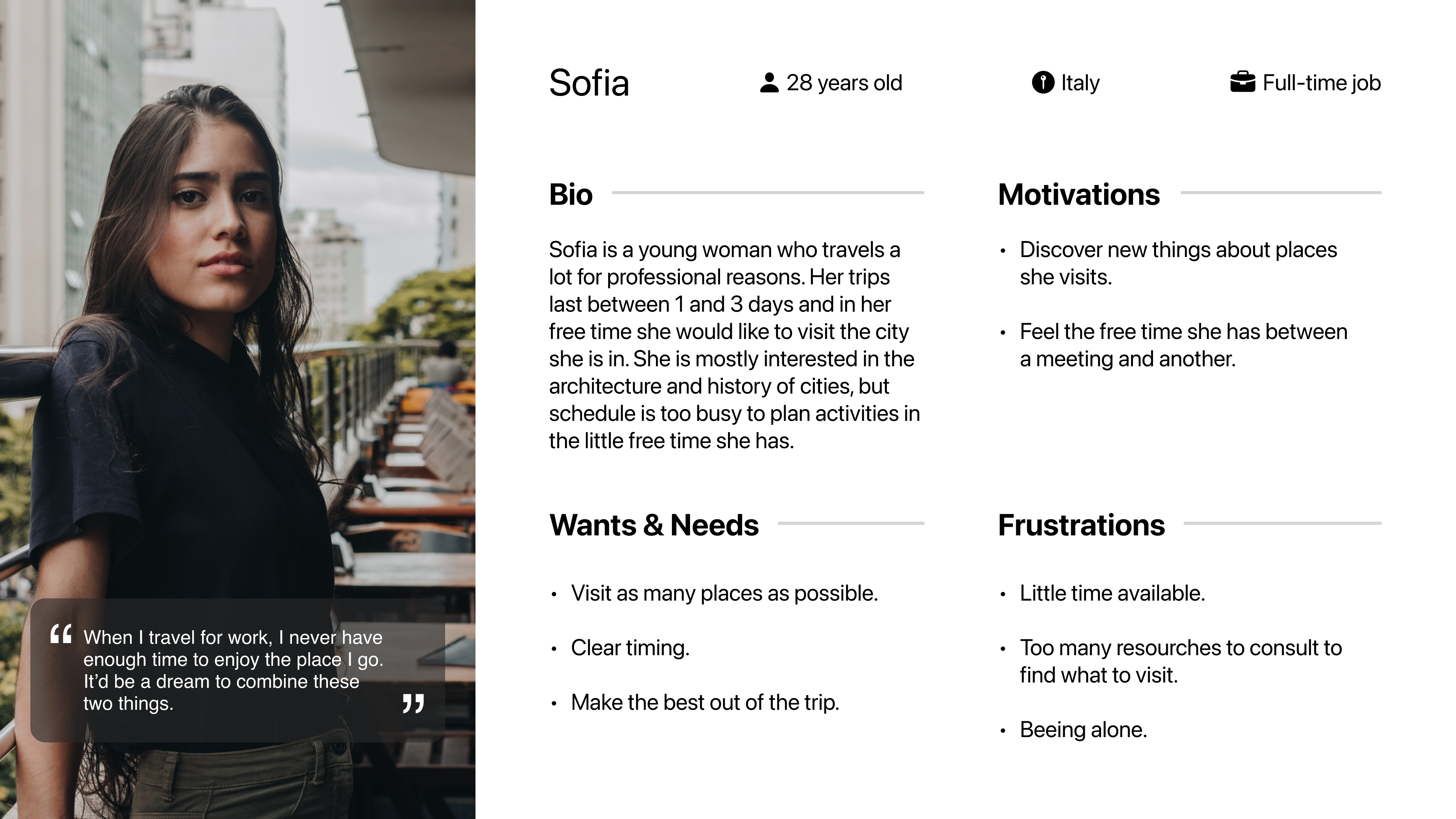
To illustrate our finding, I created a user persona.
Early solution
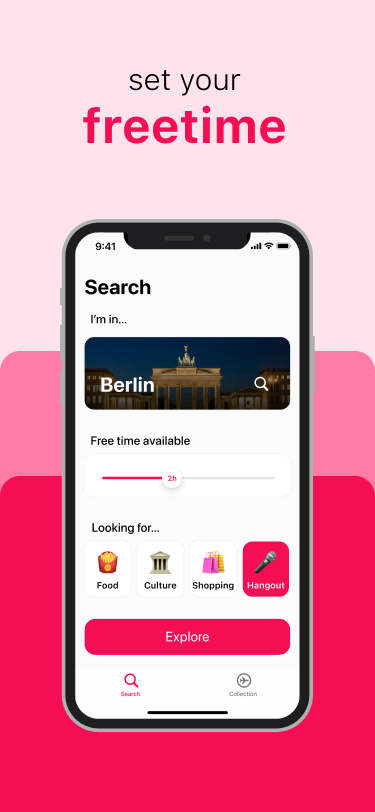
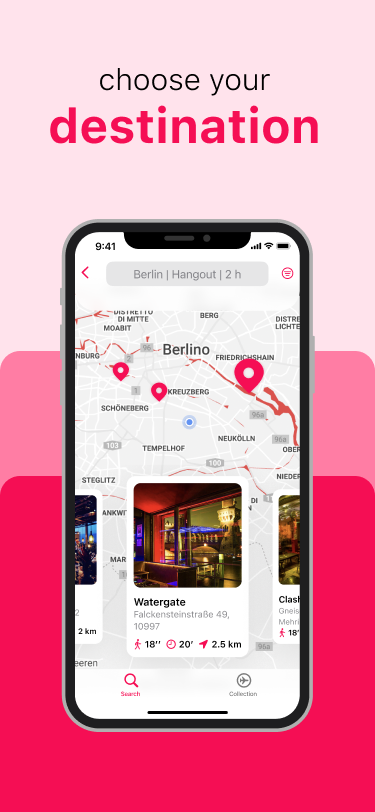
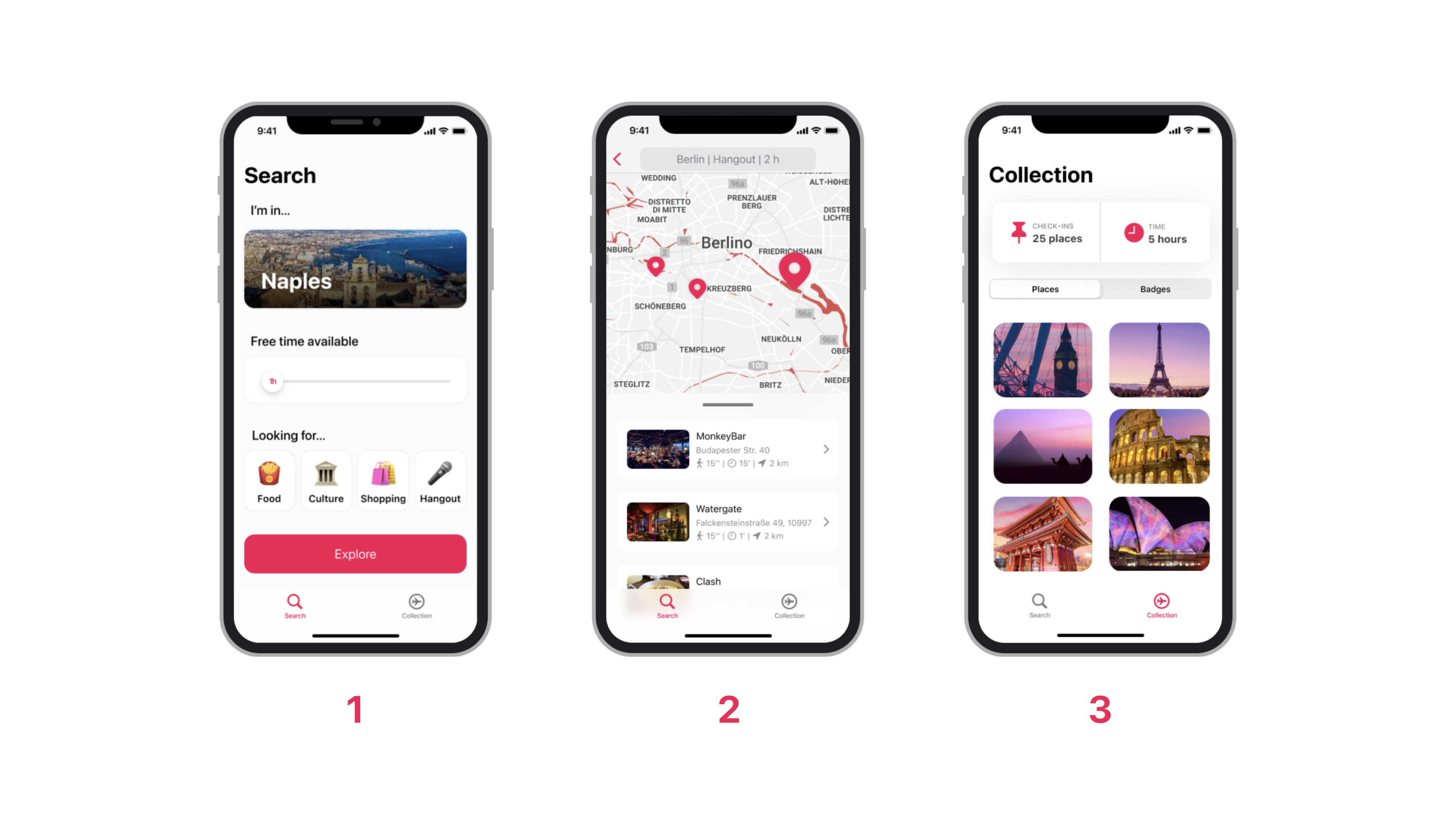
The first solution was an app that suggests activities near you, depending on how much time you have. It focused on three points:
1. Time setting: since business travellers have limited time, it is important for them that the activities they're going to do fall within the available time frame.
2. Selected results: taking into account the time available, the place where they are and the type of activity they're looking for (food, art, park...)
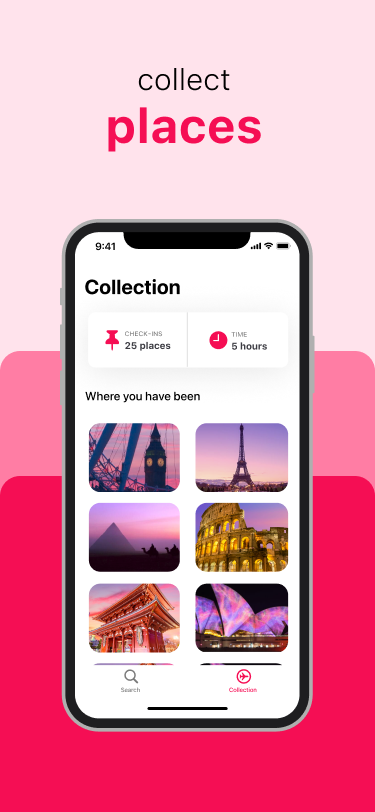
3. Badge system: a collection of places where the user has been using the app, and badges to reward and keep them motivated.
Usability testing
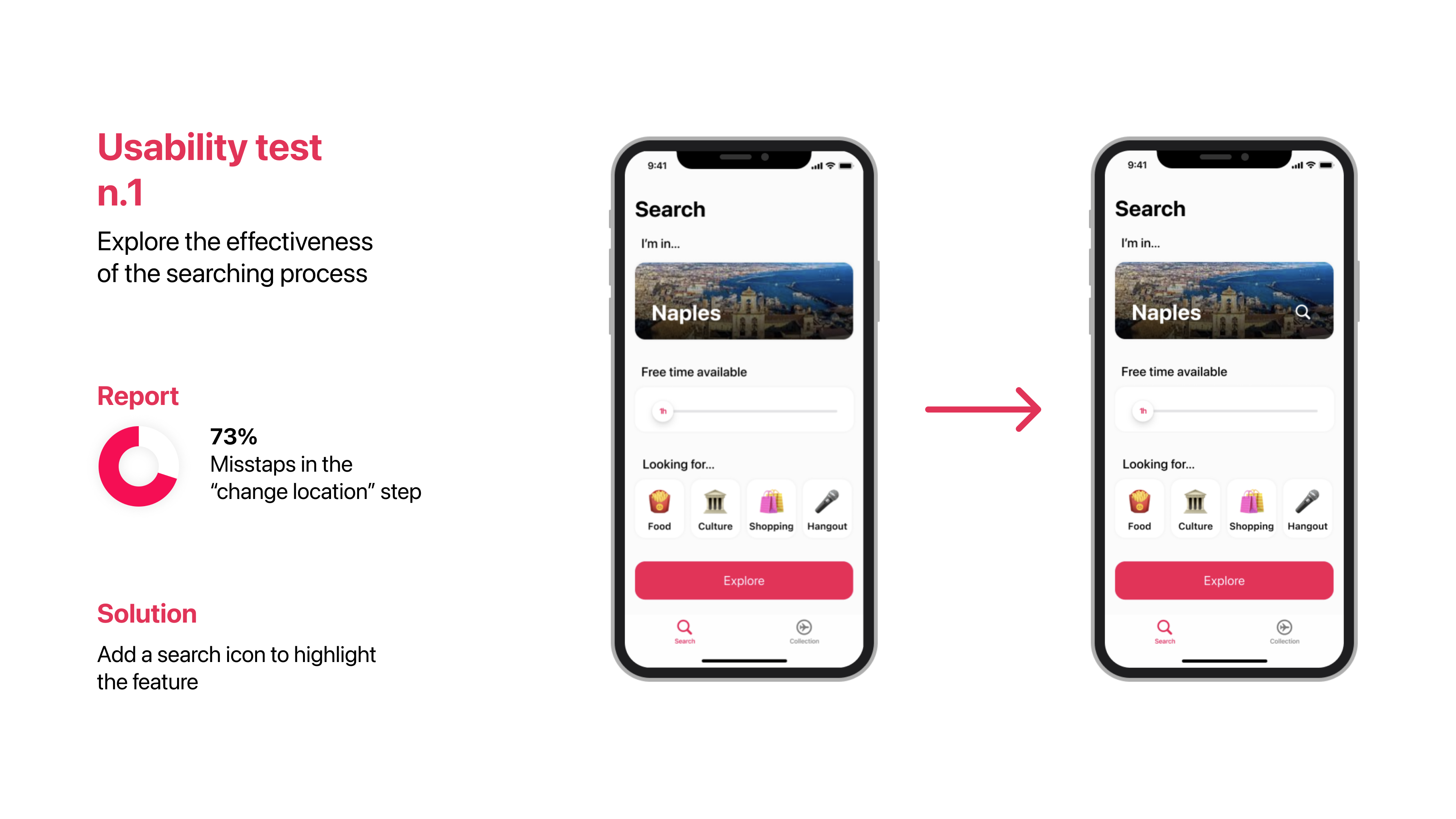
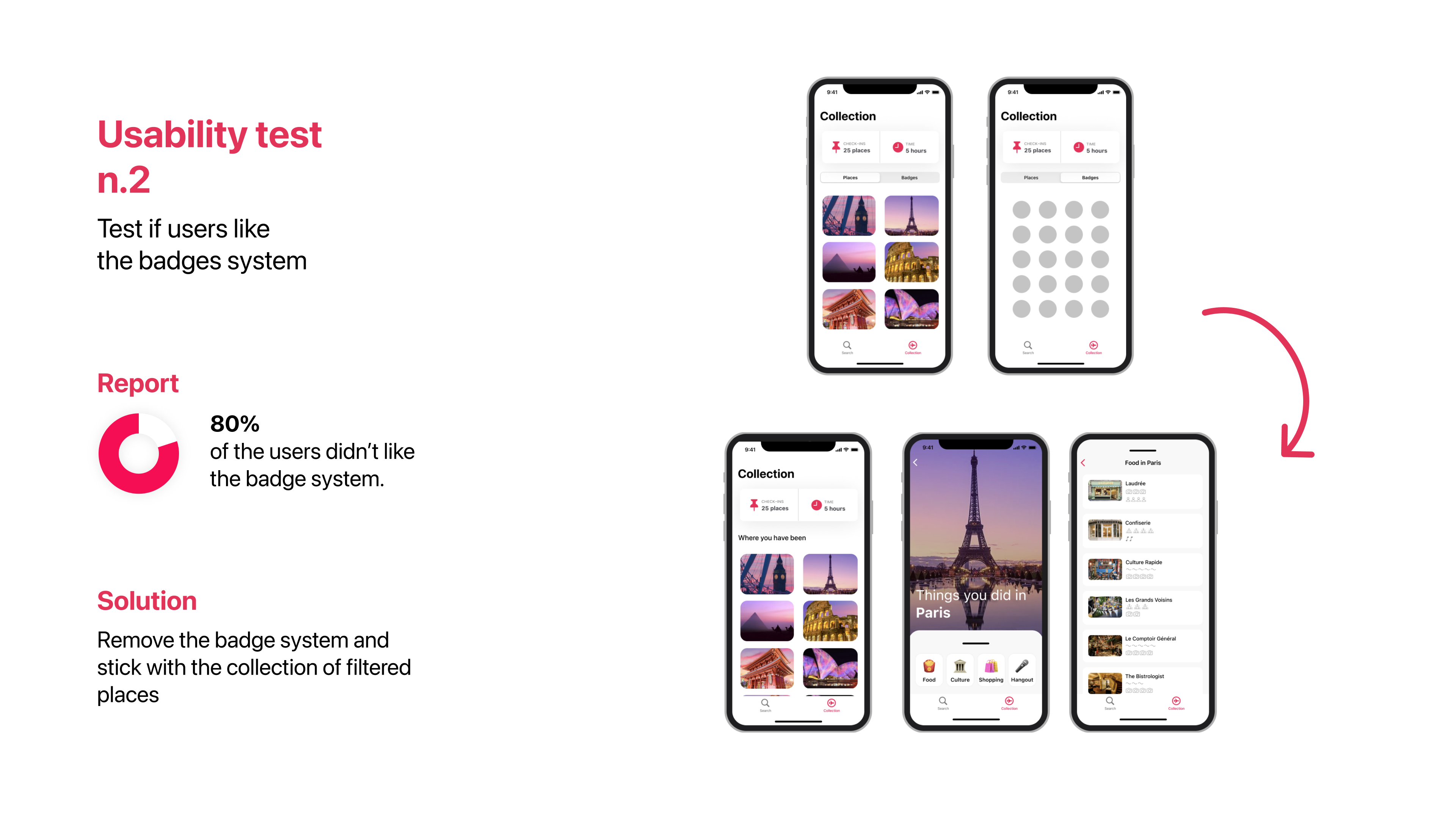
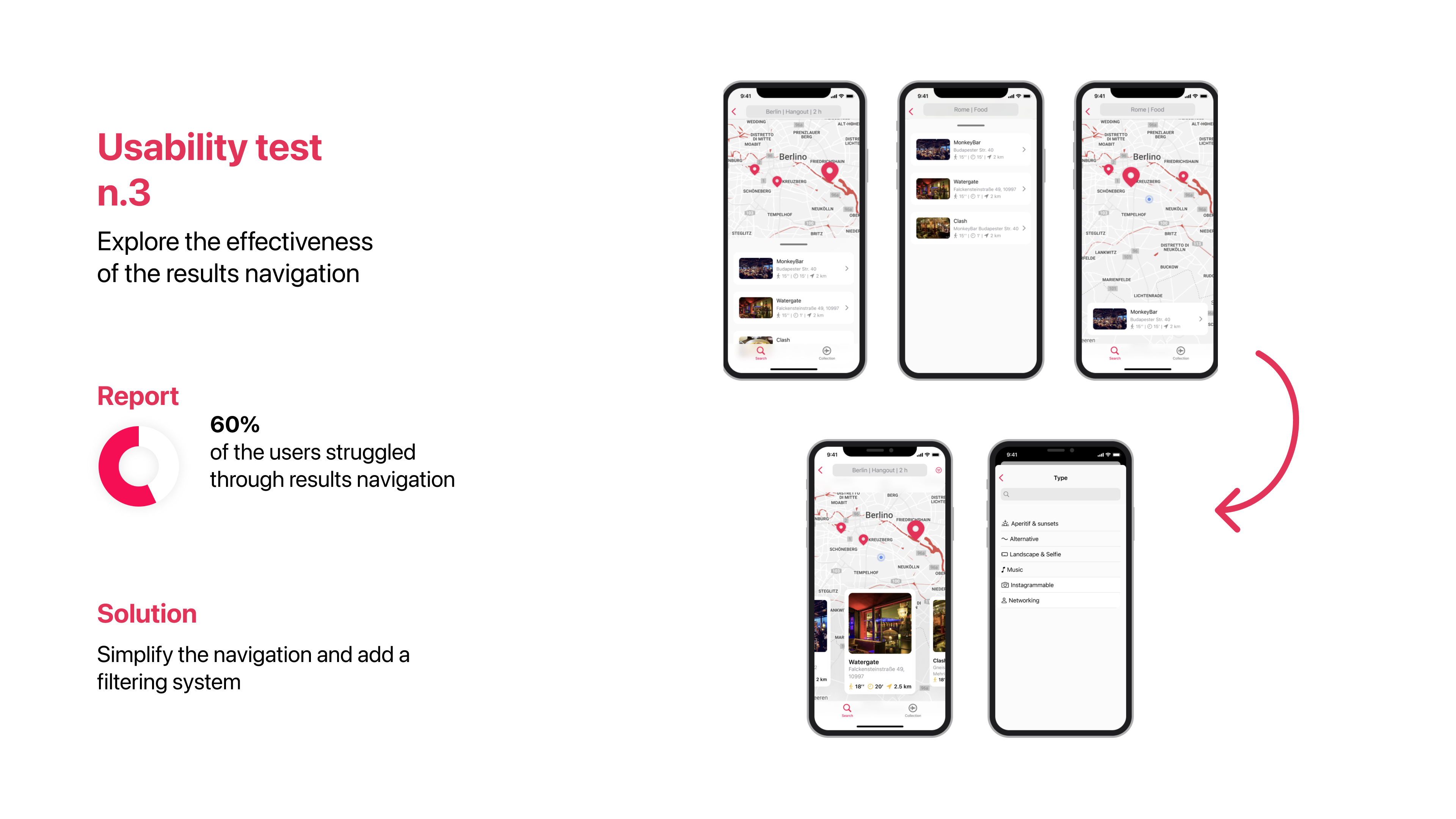
To test our early solution we used Marvel. The Usability testing have been foundamental, since allowed us to observe the user's behavior and listen for feedback.
We had three main goals in mind:
- Identify problems in the design and the navigation of the app.
- Learn about the target user preferences.
- (Hopefully) uncover opportunities to improve.
For this reason, we organized 3 short sessions, giving the user a specific task to perform, observing them, and then asking for feedbacks.
Final solution